
Traits
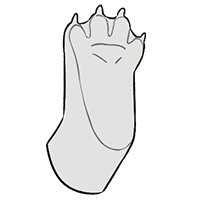
Pawed Feet (Common)
Category: Body
Pawed Feet have back feet that are paws, much like a cat or dog.
How to apply this trait:
- The back paws should be similar in form and function to the front paws.
- They should feature clawed, webbed digits. Webbing should be shown if the toes are spread out.
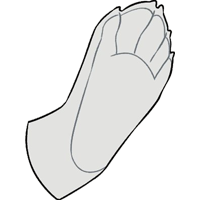
Flipper Feet (Common)
Category: Body
Hind feet that are shaped like flippers, like sea otters and seals have!
How to apply this trait:
- The back feet should be noticeably flipper-like, with claws, webbing, and a streamlined shape.

Long Claws (Uncommon)
Category: Body
Non-retractable and noticeably longer than an ottagi's standard claws, similar to those of a badger or sloth.
How to apply this trait:
- This trait applies to all claws on both the hands and feet.
- The claws should be long but remain proportional to the ottagi's paws, not so exaggerated that they become impractical or dangerous for the ottagi!
- They can be depicted with a slight curve or straight point.
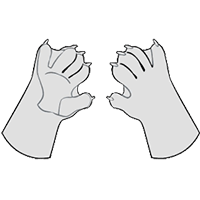
Short Claws (Common)
Category: Body
Short, retractable claws that are common for most ottagi.
How to apply this trait:
- The claws should be short and subtle, not protruding noticeably from the paws when retracted.
- This trait applies to all claws on both the hands and feet.
Cerata (Rare)
Category: Body
Cerata are specialized, fleshy protrusions similar to those found on nudibranchs (sea slugs). They are highly sensitive and allow an ottagi to detect and absorb mana.
How to apply this trait:
- Cerata are typically found in rows or clusters along the back, neck, tail, or outer edges of the limbs. There's no limit to the number of cerata.
- Cerata should appear soft and fleshy. They can be finger-like, club-shaped, or leaf-like in form, and are smallish or medium-sized.
- The tips may be rounded or featured as simple bulbs, but should not branch or appear jagged.
- The tips may be slightly translucent.
5 results
found.